
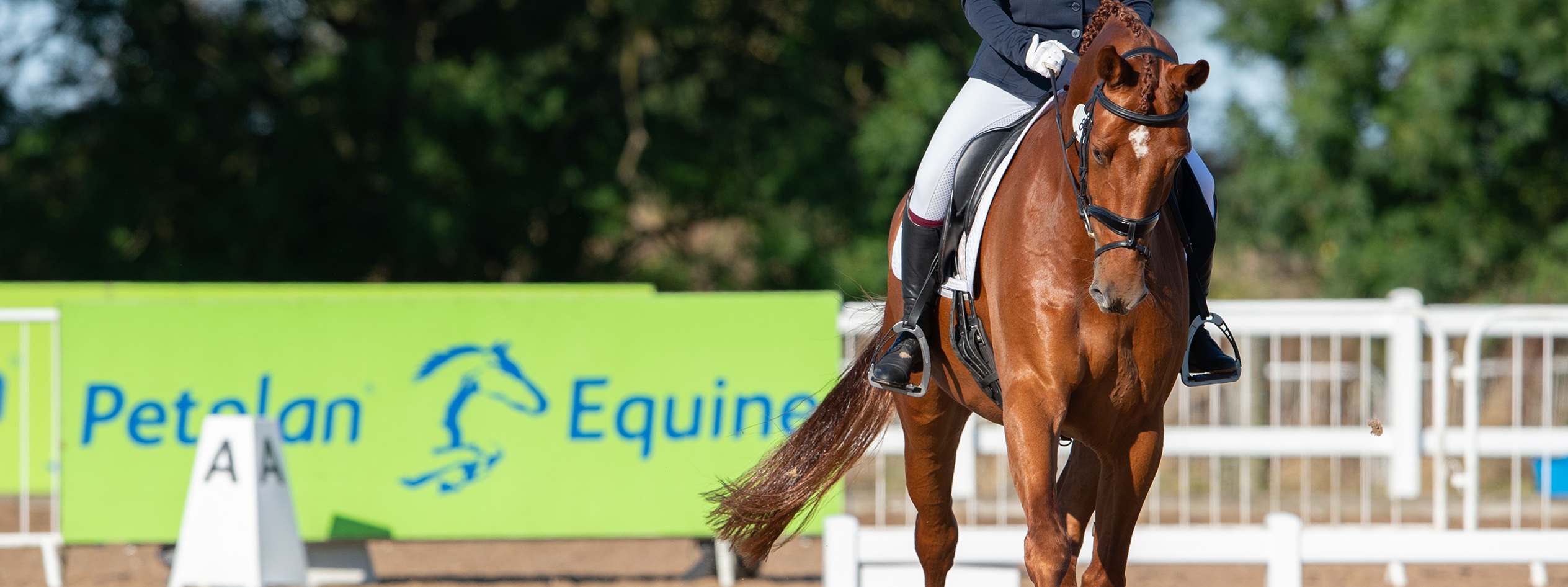
Dressage to Music
If you're looking for a fresh challenge with your horse, why not try dressage to music?
Dressage to Music, also known as Freestyle, is a form of dressage competition in which movements are performed to music. It’s a different and exciting way to compete, allowing you and your horse to showcase your skills creatively and offering endless opportunities to shine.
Many British Dressage venues hold dressage to music competitions throughout the year, including the summer Petplan Area Festivals, which host classes from Preliminary to Intermediate.
If you fancy giving it a go, qualification for the Area Festivals requires two Freestyle scores of 63% or above for Prelim to Advanced Medium, and two scores of 60% or above at PSG and Intermediate. To reach the Championship, combinations will need to be placed in the top two at an Area Festival, and wildcards will be awarded as necessary.
Getting Started
Creating a dressage to music test is great fun and can be done easily at home, with or without professional help. The beauty of this type of dressage lies in the freedom to be creative with your test floor plan and music choices. Combine the two well for a winning test!
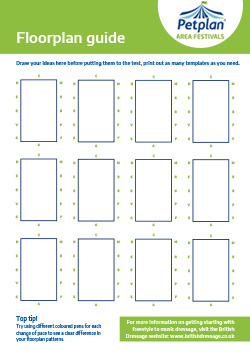
Designing your floor plan
The first thing to consider is that your test must include all the compulsory movements for your level, alongside any permitted non-compulsory movements of your choice. There are also prohibited movements at each level, so it's crucial to check these requirements before starting. Head to the British Dressage website to find out more.
After ensuring the inclusion of compulsory movements, the rest of the floor plan is up to you. Design your test to showcase your horse's strengths. For instance, if your horse excels in medium trot, highlight it across the long diagonal. Conversely, if a movement is not a strong point, plan it to show just a few good strides. This approach not only maximizes your marks but also boosts confidence for both you and your horse.
Lastly, don’t forget there’s a time limit on your test, so plan it carefully!
Choosing your music
Now that you’ve checked the compulsory movements and started thinking about how to link them together, it’s time to choose your music. Take a look at Sara Green’s guide to demystifying the music below for some expert tips and advice.
Once you’ve chosen your music tracks, it’s important to complete your music license record form and sign a music sub-license agreement. This is to keep an accurate record of the music used and allows you to use any music of your choice from the Phonographic Performance Ltd (PPL) database. While this may sound complicated, it’s actually a really simple process that can be done through the British Dressage website here.
Understanding the judging
Dressage to music test judging differs from regular British Dressage tests with two marking categories: technical and artistic. Technical marks evaluate your compulsory moves, similar to a standard test. Artistic marks, however, replace the collectives and focus instead on harmony, degree of difficulty, music, and interpretation. These are marked with a four-times coefficient so can be very influential to the final score!
For top tips on how to impress the judge, take a look at Andrew Fletcher’s guide below. More information on scoring and judging criteria is available on the British Dressage website here.
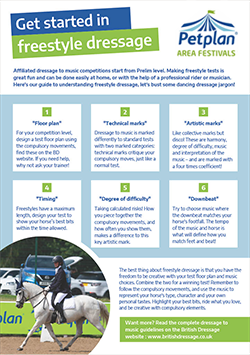
Need some inspiration to get started?
Here’s what our experts have to say about choosing your music and impressing the judges:
Sara Green – De-mystifying the music
Sara Green is first and foremost a dressage to music enthusiast, who has produced music for tests atall levels from Prelim to International Grand Prix. Here she gives us her insight into matching your music to your horse and your choreography.
Preparation
- The single most important thing to understand before you begin to choose your music is to understand the difference between rhythm and tempo and how this applies to the way your horse moves.
- The rhythm is the way the horse moves – walk four-time, trot two-time and so on. The tempo is the speed the legs work within the pace.
- It’s really important when choosing music to listen to the rhythm first. Does it sound like the pace? e.g. a marching walk, a punching trot or an up and down canter.
- Then work out your tempo. To do this just count the number of times a nominated leg hits the ground for 30 seconds, double it and you have your beats per minute (bpm). Generally, a walk will be 95-110bpm, trot 140-180 and canter 95-110. So, walk and canter have a very similar tempo but a completely different rhythm.
- When you are choosing music for your Freestyle test, listen to the predominant beat and ask yourself ‘does the rhythm say what I’m doing?’
- Then see if your piece of music has dynamic changes in it, which can be used to signify a change within the pace – working trot to medium trot for instance. Or for a stretchy trot circle in your Prelim test – use a more relaxed part of the music. This really enhances and helps with the story telling part of the performance.
Music and floorplan combination
- When you have chosen your music and matched it to your floorplan listen to it – does it fit together smoothly, does it have expression? Put simply does it feel like music to a dance routine?
- Choosing a theme can help pull all this together, maybe the same artist or tv themes, a similar orchestration or movies or musicals. This provides the link through the music.
- If you are competing at the lower levels, you do not need a complicated floorplan. Let the music lead your choreography and let it take you into movements to match its expression.
- I often say to people I’m helping, “You have to like the music you ride to but you can’t necessarily ride to the music you like.”
- Don’t forget the personality of your horse as well as showing his best movements. The judge doesn’t know your horse, but you can show his personality through the music you choose as well as matching his physical presence. i.e. don’t choose fairy light music for a heavier weight horse – unless he is exceptionally light on his feet!!
And finally…
- Don’t forget your intros and endings. You want to announce your entry into the arena with a ‘hey I’m here – I’ve arrived!’
- Your ending also needs to be definitive and finish with a ‘bang’!!
- More than anything else though, dressage to music is fun, you can be creative and show off your horse and your riding – so enjoy it!
Andrew Fletcher – Top tips to impress the judge
Andrew Fletcher is an FEI Dressage Judge and trainer. Here we ask him what his top tips are to really impress the judge when performing your Freestyle tests.
Your floorplan
- Riders get confidence from riding the movements they are good at and this produces confidence in the horse. This really enhances the performance and enjoyment of riding the test.
- I personally like to see a floorplan with some uniformity – this helps because if the pattern is easier to follow it is also easier to judge.
- Consider the way you show your horses best movements. For instance, if he is good at medium trot use the long diagonal and show it off. If he’s not so good at it, place it on a circle with just some strides shown.
- Judges always look for quality in the movements – this should be your priority working to keep you and your horse in balance.
Your Music
- Do watch what I think is the best Freestyle test ever – Charlotte Dujardin and Valegro at the 2012 London Olympics. The harmony of the music and the rider is pretty close to perfect – let it inspire you!!
- Choose music you enjoy and that means something to you. It must, of course, still suit the rhythm of the pace and the tempo of your horses’ footfalls.
- Your music should add – not take away from the riding performance. The movements and the music need to be in harmony and work to enhance the judge’s view.
- Practice with your music so you know it backwards and can make a minor change if necessary.
- A judge likes nothing better than seeing a well ridden horse with music that suits and a rider who is really enjoying themselves.
Area Festivals - Freestyle Championship Winners
We understand that getting started is sometimes the hardest step; And hope that sharing some of our previous winners experiences with you, will encourage you and your horse to give it a try.
"This was a dream come true to qualify for the Petplan Equine Area Festival Summer Championships, especially at such a prestigious venue."
Winner of Prelim Bronze class
Astrid Holcke
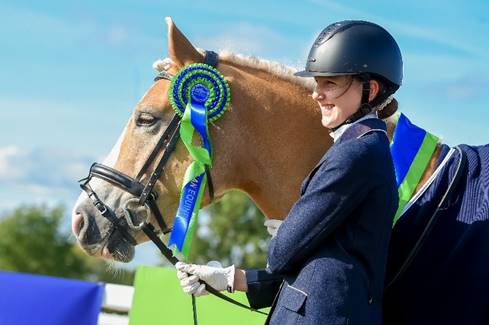
"Never thought I would ever get to the finals never mind win, this was my biggest ambition. I would highly recommend everyone to try dressage to music as it adds another dimension to your competing and is fun to prepare and do"
Winner of Novice Bronze class
Julia Case
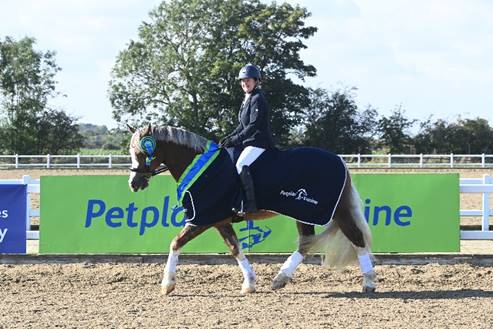
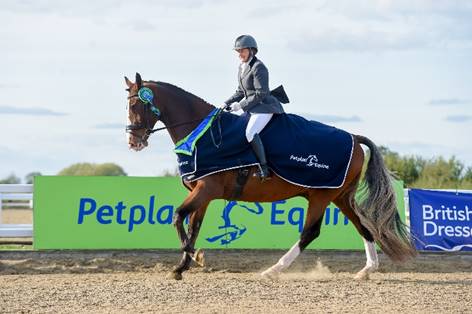
"My husband and I are living and riding our dream. If you don't go down the centre line and salute you won't achieve your goal - Such a fantastic venue for this event at Arena UK and will hopefully try and qualify at Novice level this year, I would love to repeat this."
Winner of Prelim Silver class
Sarah Moor
Keep up to date with the festival fever on the Petplan Area Festivals Facebook page.